
Business Success & Leadership
Buyer Motivators and How to Best Qualify a Buyer

Georgea
June 13, 2018
During the initial discovery meeting, there is a sense of excitement that resonates through attendees. Also as a salesperson, we are excited about a new opportunity. The client feels something different though. They may be excited for different reasons, based on the type of buyer they are. They could be happy for finding a company to be the 3rd bid, or they could be thrilled to have a company who may be able to help them achieve their dreams.
Here are some examples of Four Different Types of Buyers:
-
Newbies - This may be someone who has never exhibited before (individual or company), or someone that has an island space for the first time. They don't have a relationship with a vendor. They tend to be gathering information, and may not have a 'direction' for their brand or space. They are open slates, and are often willing to consider new possibilities.
-
Long-Term relationship - These buyers have been with their current vendor for a long time. They may be shopping around a bit to make sure that their current vendor is treating them well. They could also be curious about 'what else is out there'. They may be undecided on if they are actually leaving the relationship.
-
3rd Bid - These buyers already have a vendor in mind that they want to work with. They just need to get a 3rd bid so that Management is satisfied.
-
Sayonara (Good bye) - These buyers have already decided they are leaving their current vendor. They usually have an idea of the type of service they want. They tend to have a 'vision' of what they want their space to look and feel like.
As you can imagine, the motivation of each of these buyers is significantly different. It is a good idea to figure out what that motivation is early in your initial conversation. Doing so gives you the ability to direct the process (instead of reacting to it), and accurately speak to your buyer's specific needs. A good metaphor is the interaction of Football teams. We are the Offensive team (guide the game), rather than the Defensive team (reacting to what is given, and letting the customer guide the conversation).
It is important to read between the lines. If you figure out what the buyer is really after, you can initiate the best possible plan.
The 3rd bid buyer and Long-term relationship buyer are going to be nice, and pretend to give you a shot because they either need that 3rd bid to appease management, or they are just interested in seeing how you stack up against their current vendor. Here are some good questions to ask:
- 'Would you consider a different vendor to work with?'
- 'Is your current vendor local?'
- 'If we are the best, do we win?'
If you find that it is not worth the time, it is okay to say, "We don't want to be the third bid". It is good to get a fast 'no' (early on) so that you save time and energy.
Close Ratio and Calculated Risk:
Vicinity carries a lot of weight. If you fly out to see a client then all you have done is traveled to see them.
If you are a local vendor, you can stress you will be here for them all the time. They can drive down to see you. If they want to get a preview or training, it is easy and cost-effective. There is a certain peace of mind that comes with knowing your team is nearby. Local opportunities tend to be easier to win, close faster, and have a much higher probability of closing.
If the buyer is out of state, or you are selling over the phone, there is a 30% average close rate. The percentage is even lower if they are already committed to their current vendor. If you are local or meeting/presenting in person, that rate goes up to 50% average close rate.
Other Factors that Affect the Close Ratio:
- Venue location (Is their office location near your office or their current vendor?)
- Current vendor location (If they have one, is their vendor close to their office, or the venue?)
- Buyer's office location (Is it close to your office?)
The more of these boxes that are checked in your favor, the higher our odds of closing.
For example: A opportunity from a company that is based in Chicago, whose current vendor is in Chicago has a lower chance of closing with your company than an opportunity from a company who is based close to your office, whose current vendor is in California.
Every business decision is a calculated risk. CEOs are very interested in risk management. The closer their vendor is to the office, the lower the risk. If the vendor also has a team in the same city that the CEO's company is in, the risk gets even lower. Close vicinity means that IF anything does go wrong, it can be fixed quicker than if the vendor was far away.
What Is a Qualified Prospect?
A discovery call after the show is over is where you might do the bulk of your qualification, but it certainly isn't where qualification starts or ends. At every step of the sales process, including your first meeting at a Tradeshow or Event, you'll continuously evaluate prospects for more and more specific characteristics.
When you determine that your prospect's company is a good match for your solution and fits your ideal buyer persona, it is then time to get into the nitty-gritty. Does your point of contact actually pull the trigger on a purchase decision? This is where I see many sales people get trapped into thinking they have been talking with the decision-maker, only to find out they are only the gatherer of information.
To best determine this early in the sales cycle, ask the following:
- Do you have criteria for this purchase decision? Who defined them?
- Who else is involved in the decision?
- Will this purchase come out of your budget?
Qualifying Questions:
Sales people seem to struggle with one of the most important conversations with their prospects is the initial discovery call. Here lies the notorious divider in the road for you and your prospect. Either your prospect is a good fit for your product and/or service and you can move forward with the relationship or it is simply time to part ways.
It is not always obvious which path to take. This is where great sales qualification takes place. By asking the right questions and the right time, you'll be able to determine whether the potential relationship should continue, and if so, what next steps will be appropriate. This blog will walk you through the basic fundamentals for sales qualification, with the laid out frameworks you can use, and provide indicators for disqualification and conversational tip-offs to listen for.
- Ask about past experiences/relationships with vendors. What did they do right? Wrong? What was unique?
- What does your ideal vendor look like?
- Are you looking for a one-stop shop?
- Who was involved in your last purchasing process?
- How do you make a decision? Who is involved? Are you on the decision-making committee?
- When are you going to present this to the CEO?
- In what format do you want to present it? Is this going to be the final decision meeting?
- Is this the initial presentation, in which we can make revisions and do a color rendering afterwards?
- We would like to start with a line drawing, and then get your feedback on it so that we can make the appropriate changes. As a team, we want to make sure to collaborate. When would you like to see it? (allow time to make revisions)
- What do you need to succeed?
- What is important to you?
- If all things were equal design and price, how would you make a decision?
These qualifying questions helps the salesperson determine their prospect's fit for one criteria. That might be need, sense of urgency authority, budget, or another factor.
Good qualifying questions are typically open-ended. Asking a close-ended question, like "Is this a priority for your company right now?" boxes the buyer into an answer. The better qualifying question to ask would be "Where does this purchase decision fall on your list of business priorities?" Because you're not leading the prospect to an answer, the response most likely will be more honest and revealing.
When to Disqualify:
Many salespeople are hesitant to disqualify prospects and shrink their sales pipelines.
A natural instinct is trying to work as many leads as possible, but this isn't the best approach as it takes a lot of time and effort with little Return on Investment. The quality of your leads matter more than the quantity.
Your most precious asset as a salesperson is your time and it's far better to spend it on a handful of your best prospects than spreading yourself thin across dozens of leads.
Focusing on trying to close every possible sale deal that comes along is only going to result in dead ends with poor fit prospects, while you neglect prospects who are more likely to buy.
Final Thoughts:
Buyers will notice how much you paid attention. This will be apparent in accurate/timely responses, as well as the pricing.
Determine who you are pitching to. How far removed are they from the decision maker?
When you don't pitch to a CEO/Decision maker, you are trusting that middle person to pitch for you. That person is not likely to remember everything that you told them. Are they really going to give the same quality of presentation that you would give? The close percentage goes down when someone else pitches for you.
It is good to be confident about the probability of winning the deal. Just keep in mind that every job has a 50/50 shot of closing in your favor.
Everything has a law of average. Sometimes you win a bunch of jobs in a row, sometimes you don't win a bunch in a row. There is no set pattern. Just know that every job you work on brings you closer to win.






Featured Projects
Trending Article



November 24, 2025



November 6, 2025

November 6, 2025
Brand & Design
Georgea
The Hidden Power of a Trade Show Display Case: Turning Products Into Show-Stoppers
Your hero product deserves more than a corner on your booth. Yet at most trade shows, it ends up blending into the background, buried under signage, giveaways, and distractions. A well-placed trade…




Featured Projects
Featured Projects



Custom exhibit design, ops & logistics saved over $26,500/year and elevated audience engagement at major shows.
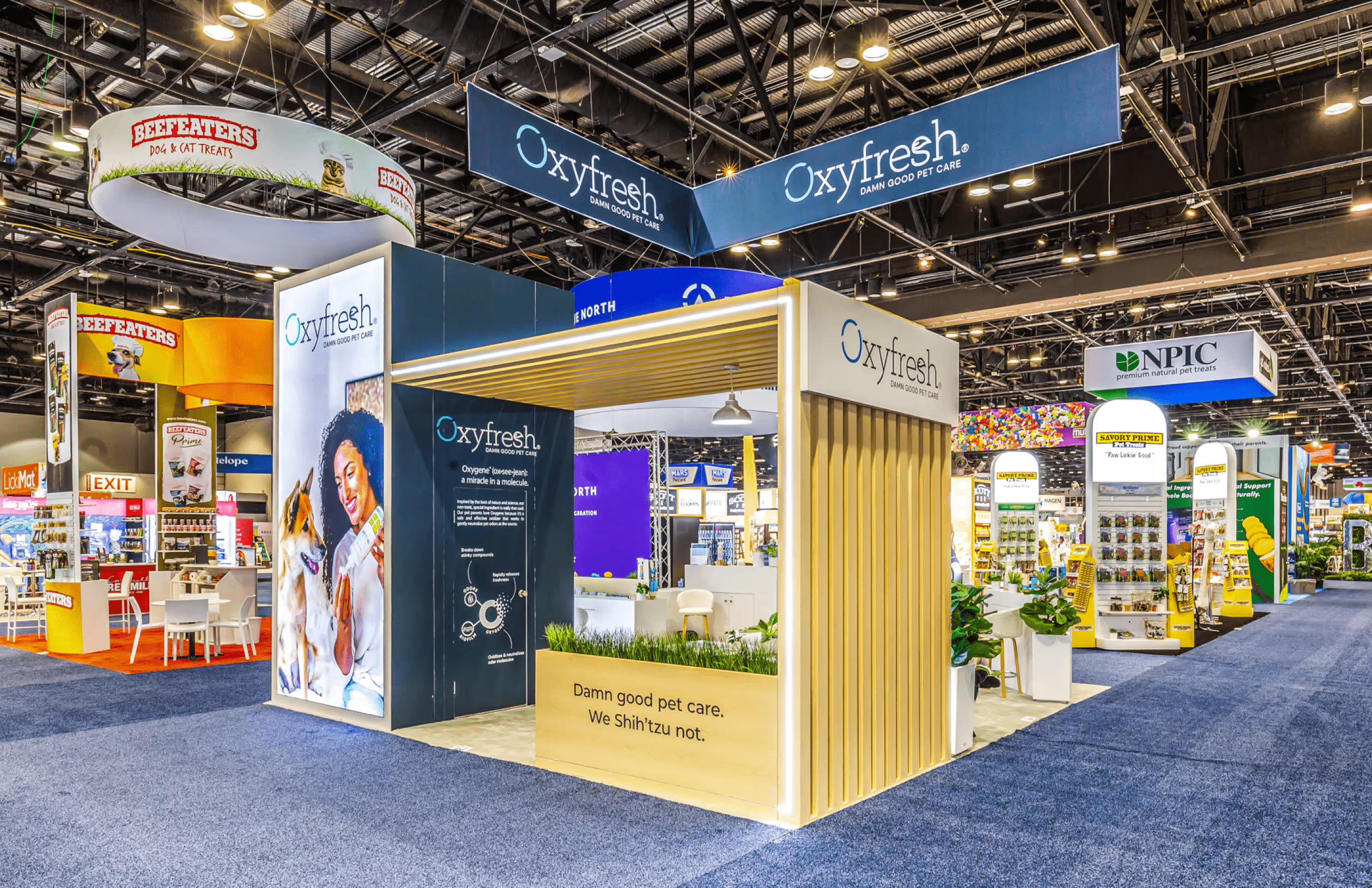
3X - Custom booth design and layout strategy led to a 3X increase in lead capture at Natural Products Expo West.



Logistics, staging, and communication were streamlined. EXHIB-IT turned chaos into order: cost control, smoother shows, and peace of mind.
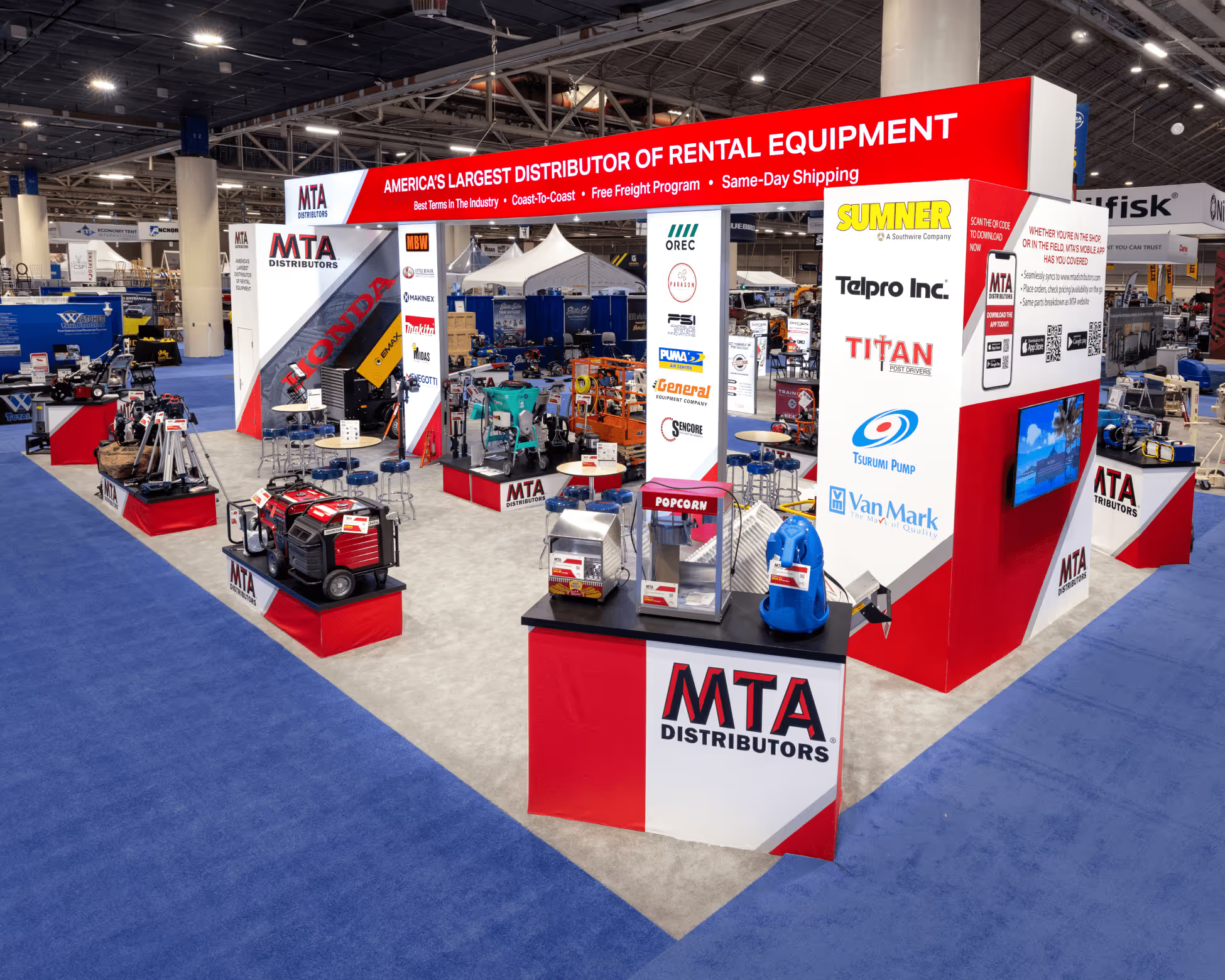
Setup time cut in half. A 30×50 custom booth reduced labor by 192 hours and boosted vendor visibility across the ARA floor.


Immersive, culture-first design turned a 20×10 space into a showcase of New Mexico, with adobe textures, local art, and community pride.
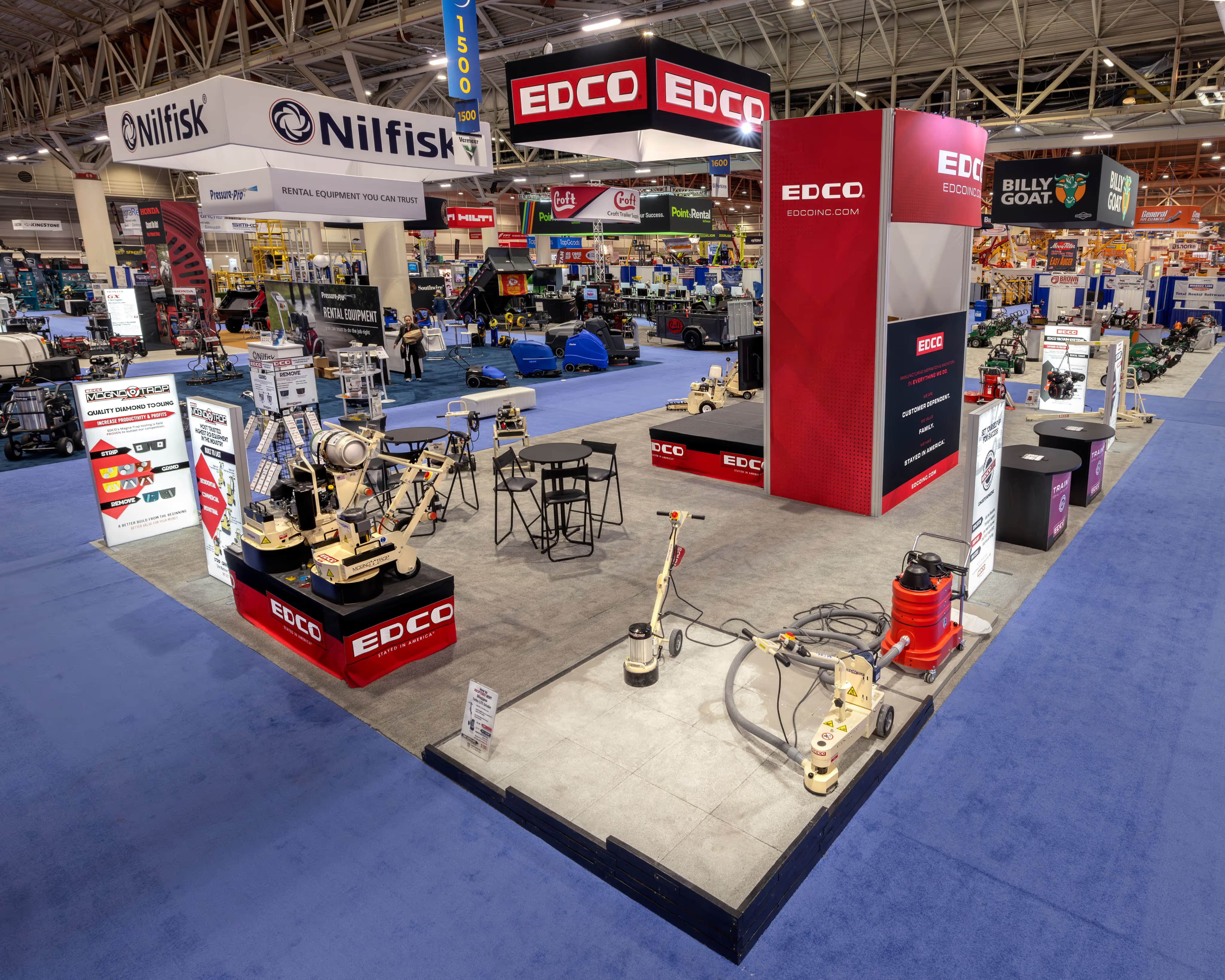
Open-concept booth brought machinery to life. Live demos and training increased engagement and positioned EDCO as industry leader.